
How Dinosaurs Used Camouflage To Survive in the Wild
Camouflage is a natural adaptation that most animals use to hide in their environment. While this helps some animals hide from fierce predators, it also allows those hunters to easily stalk prey. In this respect, dinosaurs were no different than many of today’s creatures—they relied on blending in. Read on to find out how dinosaurs used camouflage to survive in the wild.
Countershading
Animals with countershading are darker on the top half of their body and lighter on the underside. This pattern helps them blend in because it plays to the way light reflects and casts shadows. Countershading makes a species blend in with the ground around them – they look flatter – which is harder for predators to notice, especially from overhead. That shadowing effect also helped dinosaurs blend into their environment when viewed from the side, increasing their chances of survival.
The Borealopelta, an armored dinosaur closely related to ankylosaurs, likely used countershading to hide from predators. This dinosaur lived in what is now Alberta, Canada, during the Early Cretaceous period.
Dino Fact
Some dinosaurs with countershading lived in high-sun environments, so having a dark-colored pattern broke up their natural body lines and helped them blend in with the shadows.
Disruptive Coloration
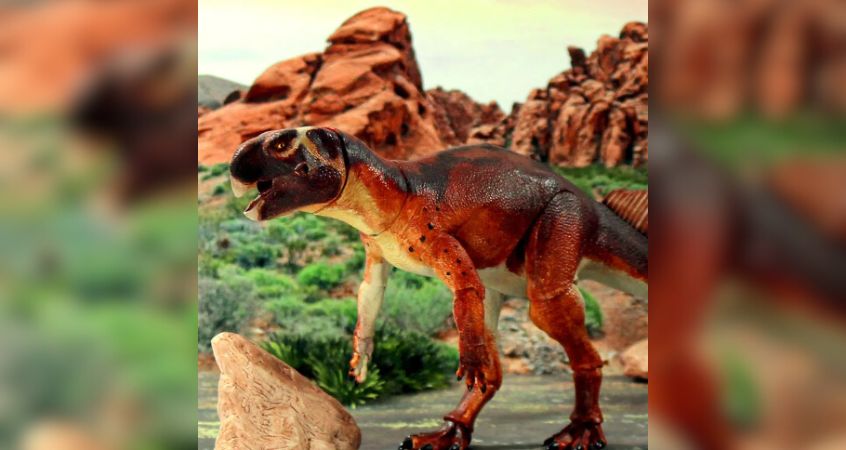
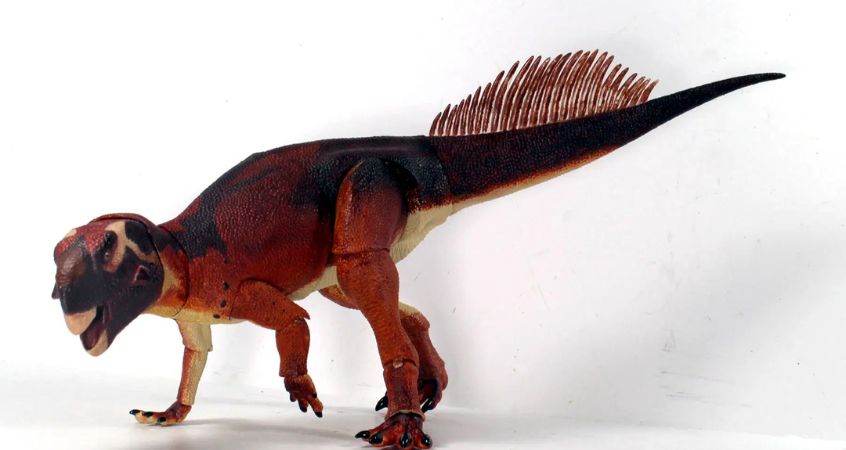
Another way dinosaurs used camouflage to survive in the wild was through disruptive coloration, which means they had contrasting colors, making it harder for a predator to spot them. Disruptive coloration can show up as spots or stripes, generally covering a majority of the animal’s body. Zebras are a perfect modern example of this, with their black and white stripes.
Predators struggle to see animals with disruptive coloration because of the optical illusion created by the opposing colors. The natural patterns break up the animal’s physical outline, so predators often struggle to detect where the animal is hiding in the environment.
While we don’t see disruptive color patterns in tons of dinosaurs, scientific evidence shows that the Psittacosaurus had this color pattern. The Psittacosaurus lived in what is now China, Mongolia, and Russia during the early Cretaceous period.
Bandit Masks
A few dinosaurs also had “bandit masks” and striped tails; we see this type of camouflage in modern animals like raccoons. Dark markings around the eyes helped break up natural facial lines and increased intraspecies recognition. Likewise, having dark marks around the eyes helped reduce glare from the sun, making it easier for dinosaurs and modern animals to see the world around them.
The Sinosauropteryx is a perfect example of a dinosaur with a “bandit mask.” This carnivorous dinosaur lived in what is now eastern China during the Early Cretaceous period. Since it lived in open areas as well as some forests, its bandit mask marking reduced glare, giving it a clearer line of sight.
Shop for Dinosaur Action Figures
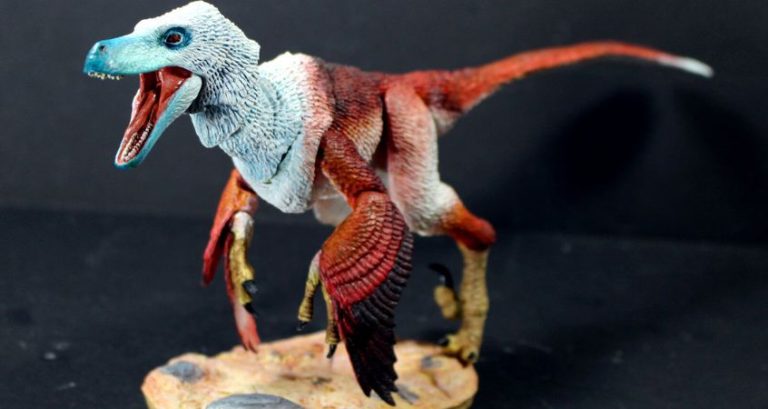
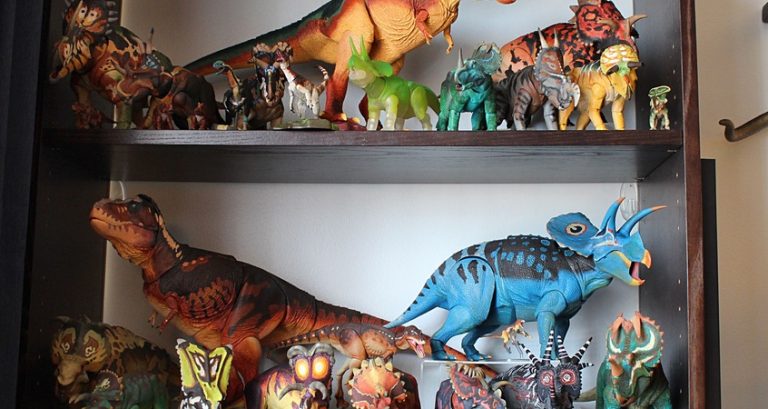
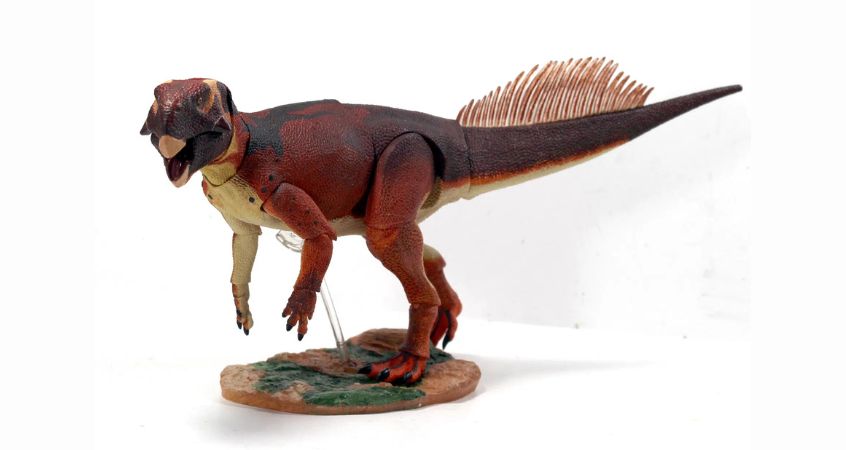
Creative Beast Studio has action figures of various dinosaur species that used camouflage in multiple ways. Our Beasts of the Mesozoic series includes countless species that relied on varying camouflage tactics. Shop for factually accurate dinosaur action figures that you can display in your collection.