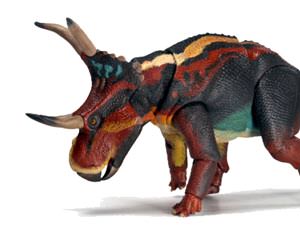

Why Did Ceratopsians Have Frills? Exploring Theories

No animal looks the way it does by sheer chance. Every feature of an animal’s development stems from species evolution, driven by what aids the creature’s survival, and dinosaurs exemplify this principle. The frill was a defining feature of all ceratopsians, and scientists have several hypotheses on why the creatures developed this distinct physical feature. Let’s explore the theories about why ceratopsians had frills.
Defending Themselves
Many scientists believe that ceratopsians had large frills to help protect themselves from predators, as they covered the backs of their necks and shoulders. Many species, such as Triceratops, used their horns to fend off predators.
Moreover, some ceratopsians also had thicker frills, which further protected their necks and key areas. It would take a stronger bite force for a predator to puncture through the frill to access major arteries in the neck.
Thermoregulation
Some paleontologists also theorize that ceratopsians had frills for thermoregulation. Scientists believe that ceratopsians with larger frills with blood vessels could release excess heat or absorb warmth. This would help the dinosaur maintain a stable body temperature, even in warm or cool climates.
Attracting a Mate
Ceratopsians most likely also had frills because they helped attract mates. Scientists believe this because it’s a physical and behavioral trait we see in many modern animals. For example, birds-of-paradise have vibrant feathers and do an elaborate dance to attract a mate.
It’s likely that, within their species group, ceratopsians with larger frills were more likely to attract mates, since their appearance signaled better genetics. Likewise, frills may have varied in shape and color, allowing individuals to stand out during mating.
Recognizing One Another
Having a frill also helped ceratopsians recognize one another. Differences in frill size, shape, and pattern could signal information about age, species, and sex. For instance, male Triceratops had a broader, more pronounced frill than females; note that this difference is not universal among ceratopsians, but is specific to this species.
Collect Your Favorite Ceratopsians
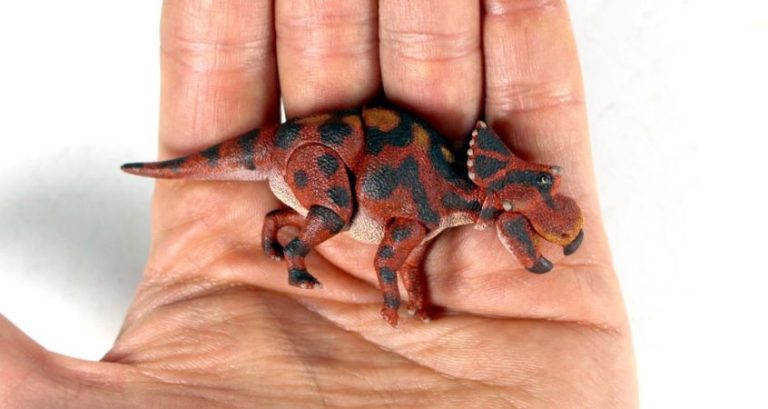
The ceratopsian’s frill was one of its defining traits and likely served various roles that aided in species survival. Creative Beast Studio’s Beasts of the Mesozoic Ceratopsian Collection captures the diversity and detail of ceratopsians. All our action figures showcase the unique frills and horns of these magnificent animals. Invite the magnificent world of the Mesozoic into your home!