
Dilophosaurus: What Jurassic Park Got Right and Wrong
The Jurassic Park franchise is one of the most beloved series and popularized the public’s love for dinosaurs. While it shows plenty of beasts on the big screen, most depictions aren’t as accurate as they could be.
The Dilophosaurus is one of the many threatening creatures in the film, as it’s a venomous predator with a large neck frill. As interesting as this dinosaur is in the movies, some of its characteristics lean more toward creative license than scientific fact. Explore what Jurassic Park got right and wrong about the Dilophosaurus.
Fact: It Lived During the Jurassic Period
While the movies are called Jurassic Park, that doesn’t necessarily mean every species shown lived during the Jurassic period. Many dinosaurs featured in the franchise actually lived during the Cretaceous Period, including famous examples such as T. rex and Velociraptor.
Dilophosaurus, however, really did belong in the Jurassic lineup as it lived during the Early Jurassic. In fact, Dilophosaurus appeared long before many of the larger, more famous predators people usually associate with dinosaur movies, making its placement in Jurassic Park surprisingly accurate.
Fiction: It Was Relatively Small
Although a human-sized dinosaur isn’t exactly “small” by animal standards, compared to other beasts, it leans towards the tinier side in the movies. Fossil evidence tells a different story: real Dilophosaurus stood about five to seven feet tall at the hip, stretched around twenty feet long, and likely weighed several hundred pounds. In other words, it may have been human-height in one measurement, but its full body size was far closer to that of a large predator than to that of a person.
Dino Fun Fact
Interestingly, the Dilophosaurus was one of the largest dinosaurs in what is now North America during the Early Jurassic.
Fact: It Ate Meat
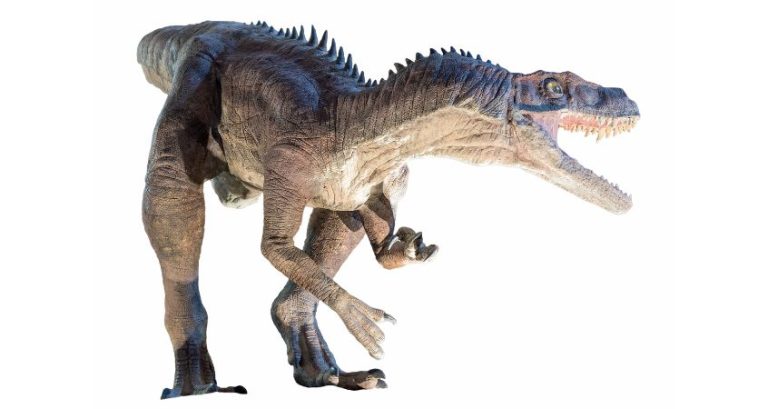
As shown in the franchise, the Dilophosaurus was indeed a meat-eating dinosaur. In fact, it belonged to a group called theropods, which were mostly bipedal carnivores. Like other theropods, Dilophosaurus walked on two legs and had sharp teeth suited for biting into prey.
Scientists are not entirely sure what Dilophosaurus hunted, but it likely ate smaller dinosaurs, early reptiles, and other animals in its environment. Some evidence also suggests it may have scavenged when the opportunity came up.
Fiction: It Spat Venom
Among the many things Jurassic Park got right and wrong about the Dilophosaurus, one big thing it got wrong is that the animal could spit venom. There is no paleontological evidence that the Dilophosaurus, or any dinosaur, could spit venom. The filmmakers likely added this to make the story more dramatic and thrilling for viewers.
Instead of relying on venom, Dilophosaurus likely used its size, speed, teeth, and claws to catch prey or scavenge when the opportunity arose. At around twenty feet long, it was far from a harmless little dinosaur. It may not have had a Velociraptor-style sickle claw, but it was still a large Early Jurassic predator built to bite, slash, and chase.
Fact: It Had Two Head Crests
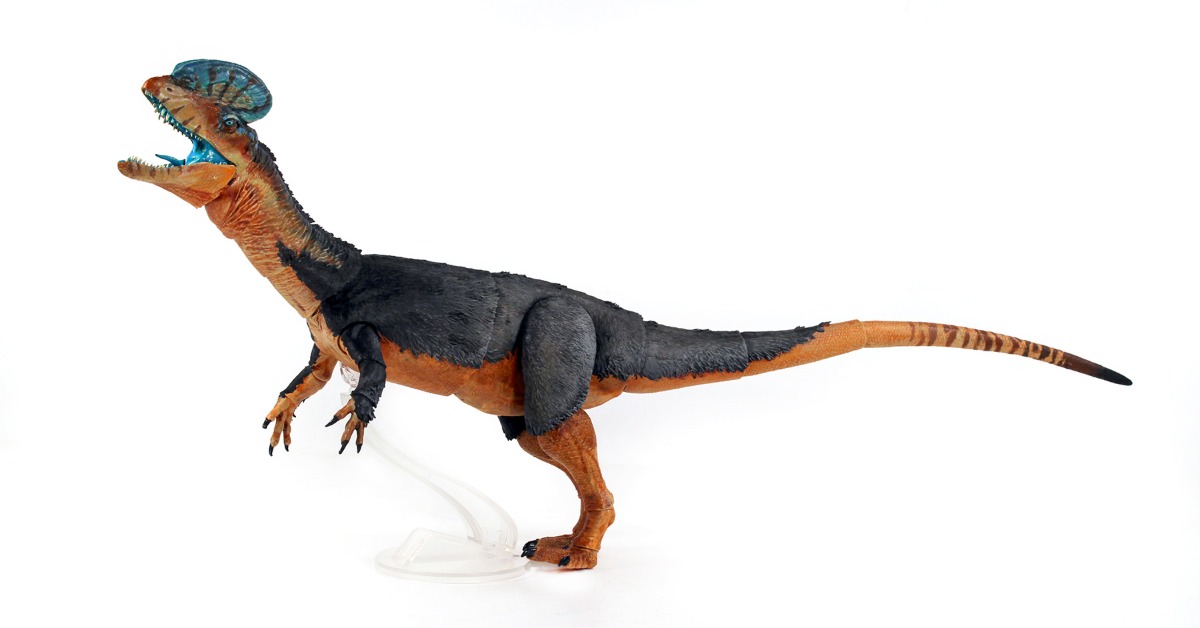
Another big thing Jurassic Park got right is that Dilophosaurus really did have two thin, bony crests on top of its skull. In fact, this beast’s name means “two-crested lizard,” which refers to this distinctive feature. The movie’s version includes those crests, making this one of the more accurate parts of its design.
However, the real crests probably were not used as weapons, given how thin they were. Although scientists don’t know for sure, it’s more likely that the Dilophosaurus had a head crest for display, species recognition, or attracting mates. In other words, they may have helped Dilophosaurus stand out from other dinosaurs rather than fight them.
Fiction: It Had a Big Neck Frill
One of the most memorable parts of the Jurassic Park Dilophosaurus is its large frill, which flares out around its neck before it attacks. It makes the dinosaur look more dramatic and threatening, but there is no fossil evidence that the real Dilophosaurus had anything like that.
The look of modern lizards likely inspired the neck frill, as the feature seen in the Jurassic Park movies is similar; the dinosaur uses it to look bigger and scare off threats. For Dilophosaurus, though, this was a movie invention. The real dinosaur already had its own eye-catching feature with the two crests on its head, so the filmmakers added the extra frill for suspense and visual flair rather than scientific accuracy.
Fact: It Was Still Scary and Dangerous
Even without a neck frill or venom, Dilophosaurus would still have been a frightening animal to encounter. The real dinosaur was around twenty feet long, stood several feet tall at the hip, and likely weighed several hundred pounds. That makes it far larger than the human-sized creature shown in Jurassic Park.
Its danger lay in its actual anatomy, not in movie monster features. Dilophosaurus had speed, size, sharp teeth, and claws on its side, making it one of the major predators of its environment. So while Jurassic Park invented some of its most famous traits, the real version did not need those additions to be impressive.
Fiction: It Had Weak Jaws and Needed Venom to Hunt
Even without a neck frill or venom, Dilophosaurus would still have been a frightening animal to encounter. The movie makes it seem like a smaller, sneakier predator, but the real dinosaur was much more imposing. Its large size and physical strength made it a powerful predator.
The danger of the Dilophosaurus stemmed from its actual anatomy, not movie-monster features. Dilophosaurus walked on two strong legs, had sharp teeth for gripping and tearing, and had clawed hands that could have helped it hold onto prey. Its long tail also helped with balance, allowing it to move steadily while chasing, turning, or striking. While it may not have had a Velociraptor-style sickle claw or venomous bite, it still had the tools of a serious carnivore.
Buy Accurate Dinosaur Figures
Dinosaurs like Dilophosaurus are even more fascinating when we look past the movie magic and into what fossil evidence tells us. Learning what films got right and wrong can make these prehistoric animals feel even more impressive.
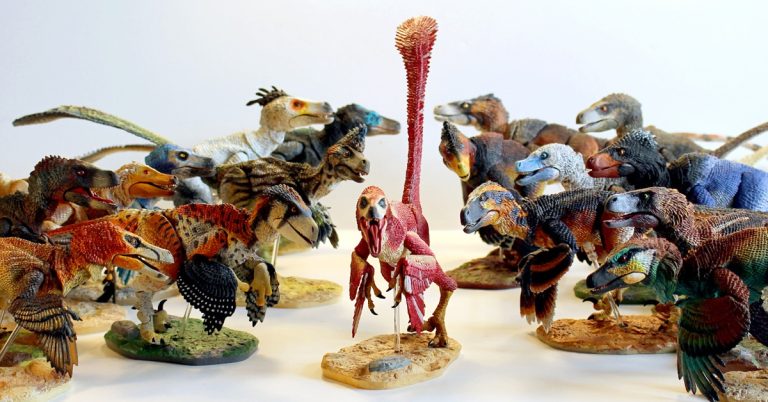
Creative Beast Studio offers Beasts of the Mesozoic figures inspired by dinosaurs from the Triassic, Jurassic, and Cretaceous periods. Our collection includes detailed, poseable dinosaur figures designed with scientific accuracy, along with prints, postcards, and display-friendly options for serious fans. Explore the collection and bring a more accurate prehistoric world to your shelf.