
4 Fascinating Facts About the Kosmoceratops

The Triceratops is often the first beast to come to mind when we think of dinosaurs with horned faces or frills. However, that dinosaur was one of many that had those vital facial features. Other prehistoric reptiles, such as the Kosmoceratops, had horns and a frill. Discover four fascinating facts about the Kosmoceratops.
What Was the Kosmoceratops?
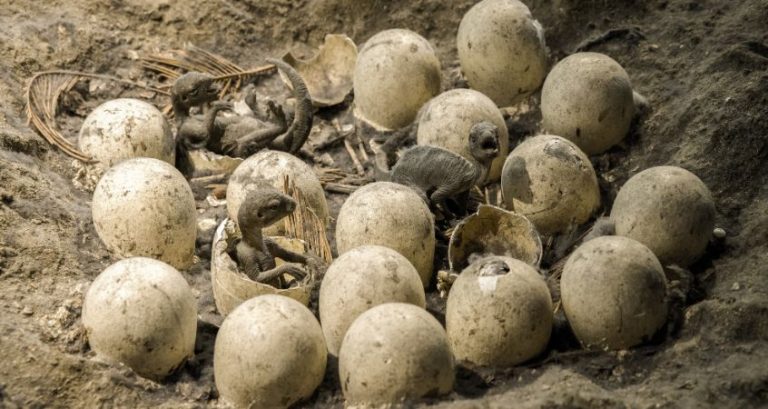
The Kosmoceratops was a member of the Ceratopsian family, the same dinosaur group from which well-known species such as the Triceratops come. Like its fellow Ceratopsians, the Kosmoceratops were herbivorous and laid eggs to reproduce.
Moreover, this dinosaur walked on all four legs and was around 15 feet long. Many scientists believe that the Kosmoceratops were one of the smallest members of the Ceratopsian family, as other beasts, such as the Triceratops, were generally 26 to 30 feet long.
When and Where the Kosmoceratops Lived
Dinosaurs lived on our planet for millions of years, and each period of the Mesozoic era brought about new beasts. The Kosmoceratops lived during the late Cretaceous period in the regions that are now Utah and Arizona in the United States.
Although the Triceratops also lived during the late Cretaceous period, they may not have crossed paths with the Kosmoceratops. While both lived in North America, they inhabited separate regions of the landmass; the Triceratops lived in what is now Wyoming and North Dakota.
It Had a Lot of Hornes
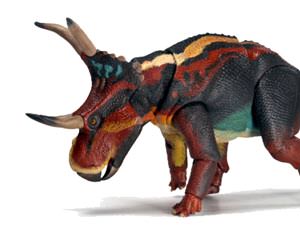
One of the most distinct features about this member of the Ceratopsian family was the number of horns on its face and frill—the Kosmoceratops had 15 horns. Their numerous horns may also be why this prehistoric reptile got its name, Kosmoceratops, meaning “ornamented horned face.” Many paleontologists believe that this beast had more horns than any other dinosaur.
Dino Fact
Although all those horns could be for scaring off predators, most scientists hypothesize that it’s more likely the Kosmoceratops used its horns to attract a mate. Males with larger horns were likely more attractive to female Kosmoceratops.
We Discovered It Recently
Another fascinating fact about the Kosmoceratops is that this species is a fairly recent discovery! Scientists uncovered the fossil in 2006 in the Grand Staircase-Escalante National Monument in Utah, USA. The scientific community credits a man named Scott Richardson, who was an archaeologist technician and trained volunteers at the site.
Order Your Favorite Ceratopsian
Creative Beast Studio’s Beasts of the Mesozoic Ceratopsian series features many members of the Ceratopsian family, including the Kosmoceratops. View our selection and purchase your favorite Ceratopsian dinosaur!