
Jurassic vs. Cretaceous: Which Had the Coolest Dinosaurs?

Dinosaurs lived throughout the Mesozoic era, and each period brought different species that we know and love today. More specifically, the Jurassic and Cretaceous periods saw the emergence of many of the best-known and most scientifically studied dinosaurs. From towering herbivores to apex predators, these periods gave rise to some of the most powerful land animals in Earth’s history. Let’s explore whether the Jurassic or Cretaceous period had the coolest dinosaurs.
Jurassic Period Dinosaurs
The Jurassic Period was around 201 to 145 million years ago and was the middle period of the Mesozoic Era. During this time, the climate was generally warm and humid, with no polar ice caps and higher global temperatures than today. Forests of conifers, ferns, and cycads covered much of the land, creating lush environments that supported a wide diversity of dinosaurs.
Below are some of the most fascinating dinosaurs of the Jurassic.
Allosaurus
Allosaurus lived during the Late Jurassic, around 155 to 145 million years ago, in what is now the Western United States (in the Morrison Formation), Portugal, and possibly Tanzania. It measured about 28 to 33 feet in length, stood roughly 10 feet tall at the hip, and weighed between 3,300 and 5,500 pounds; its massive size made it an apex predator in its territory.
Moreover, Allosaurus was a theropod dinosaur characterized by a large skull and short, three-fingered forelimbs. It possessed sharp, serrated teeth adapted for slicing flesh, allowing it to prey on large herbivorous dinosaurs.
Dino Fact
The Morrison Formation is one of the richest Jurassic dinosaur fossil sites in the world, having fossils of Allosaurus, Diplodocus, Ceratosaurus, and more.
Stegosaurus
Stegosaurus is one of the most beloved dinosaurs because of its unique appearance—its large back plates and tail spikes make it instantly recognizable. This animal lived approximately 155 to 150 million years ago during the Late Jurassic period in what are now the western United States (within the Morrison Formation) and Portugal.
Like most large herbivorous dinosaurs, Stegosaurus was quadrupedal, meaning it walked on four legs. It measured about 26 to 30 feet in length, stood roughly 9 to 14 feet tall, and weighed between 11,000 and 15,000 pounds. Stegosaurus also possessed four long spikes on its tail, which it likely used defensively against predators in its environment.
Brachiosaurus
Brachiosaurus lived approximately 154 to 150 million years ago during the Late Jurassic period and likely inhabited the same ecosystems as Stegosaurus within the Morrison Formation. This massive herbivore measured about 70 to 85 feet in length, stood 40 to 50 feet tall, and weighed between 66,000 and 110,000 pounds, making it one of the tallest dinosaurs ever discovered.
One of the most distinctive physical traits of this sauropod was its exceptionally long neck, which enabled it to reach vegetation high above the ground. Fossil evidence shows that Brachiosaurus had spoon-shaped teeth adapted for stripping leaves from conifers, ginkgoes, and other tall plants
Cretaceous Period Dinosaurs
The Cretaceous period lasted from approximately 145 to 66 million years ago and marked the final chapter of the Mesozoic Era. During this time, continents continued to separate, sea levels were high, and flowering plants began to spread across the landscape. Similar to the Jurassic, the Cretaceous period has numerous dinosaur species that we’ve detailed below.
Tyrannosaurus rex
Tyrannosaurus rex, best known as T. rex, lived approximately 68 to 66 million years ago during the Late Cretaceous period in what is now western North America. Paleontologists find most T. rex fossils in the Hell Creek Formation in Montana, North Dakota, and South Dakota. This massive theropod measured about 40 feet in length, stood roughly 12 to 13 feet tall at the hips, and weighed between 15,000 and 20,000 pounds, making it one of the largest land predators to ever exist.
This fierce beast is one of the most well-known dinosaur species, distinguished by its enormous skull, serrated teeth, large body, and tiny forelimbs. Although it had relatively small, two-fingered forelimbs, its muscular legs and strong tail provided stability and enabled it to move efficiently through its environment as an apex predator.
Dino Fun Fact
Most scientists estimate that T. rex had one of the strongest bite forces of any terrestrial animal in history.
Triceratops
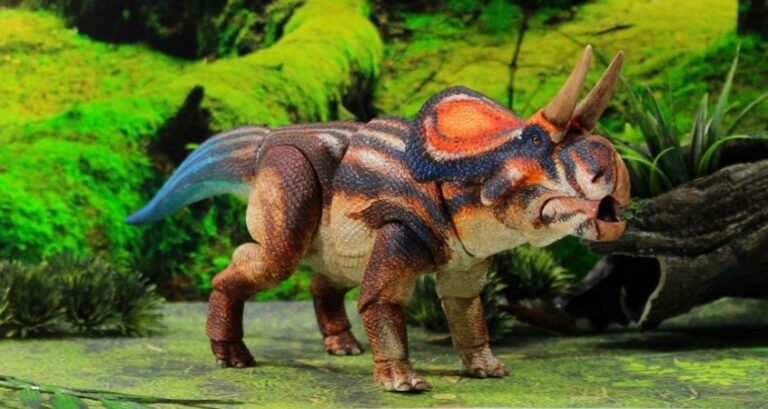
Triceratops lived approximately 68 to 66 million years ago during the Late Cretaceous period in what is now western North America; scientists find many fossils in the Hell Creek Formation, where these dinosaurs shared their environment with Tyrannosaurus rex. This large herbivorous dinosaur measured about 26 to 30 feet in length, stood roughly 9 to 10 feet tall at the shoulder, and weighed between 13,000 and 26,000 pounds.
One of the most recognizable features of Triceratops was its large bony frill and three horns—two long horns above the eyes and a shorter horn on the nose. Most scientists hypothesize that triceratops used their horn and frills as a form of self-defense or to attract a mate.
Velociraptor
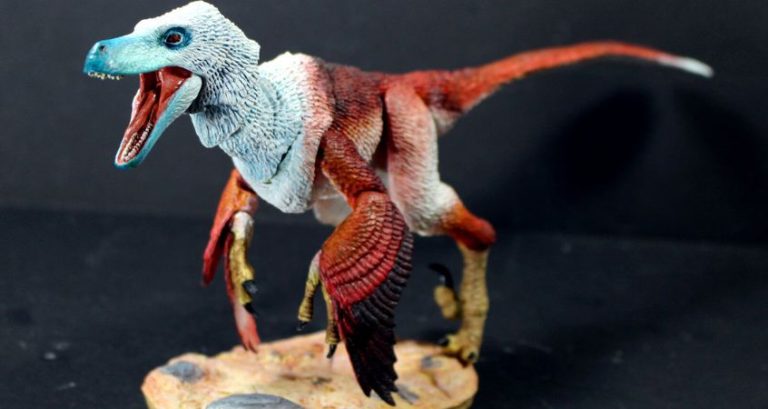
Velociraptor lived approximately 75 to 71 million years ago during the Late Cretaceous period in what is now Mongolia and parts of Central Asia. Fossils have been discovered in the Djadokhta Formation of the Gobi Desert. This relatively small theropod measured about 6 to 7 feet in length, stood around 1.5 to 2 feet tall at the hip, and weighed roughly 30 to 45 pounds.
This turkey-sized theropod’s sickle-shaped claw on the second toe made it stand out among other predators. Velociraptors likely used their hooked claws to grasp and restrain prey. Another notable feature of this dinosaur is the presence of quill knobs along its forearms and possibly its tail; these structures indicate that it had feathers.
Dino Fun Fact
Although Velociraptors had feathers, they could not fly. Instead, this feature likely helped regulate their body temperature and increased their aerodynamic efficiency.
Which Period Had the Coolest Dinosaurs?
Deciding whether the Jurassic or Cretaceous had the coolest dinosaurs comes down to opinion. Which beasts do you like most? If you are drawn to fearsome theropods with bone-crushing bites, you may prefer the Cretaceous period. However, if you admire massive long-necked herbivores and uniquely armored dinosaurs, then the Jurassic period might claim the title.
Both the Jurassic and Cretaceous periods produced extraordinary species that dominated their respective environments. Brachiosaurus towered over most other beasts, and T. rex was an incredible hunter. The “coolest” period for dinosaurs depends on what traits you find most impressive.
Collect Your Favorite Dinosaurs
Creative Beast Studio has realistic dinosaur action figures for sale that allow collectors to bring scientifically accurate prehistoric animals into their homes. We have a wide range of articulated dinosaur figures designed with meticulous detail and multiple points of articulation to reflect scientific principles. Whether your loyalty lies with the Jurassic or the Cretaceous, being a dinosaur fan means never outgrowing your curiosity about the ancient world.