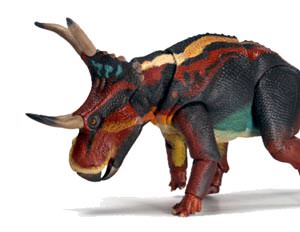

What Made the Medusaceratops Lokii Stand Out?
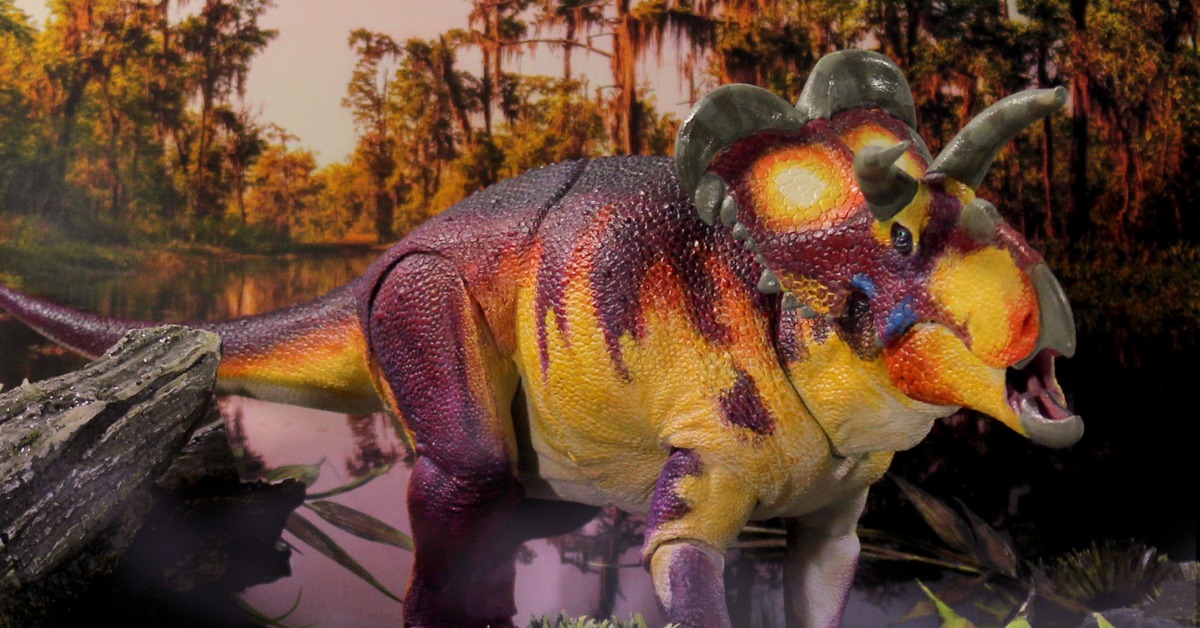
Medusaceratops lokii may not have the same name recognition as Triceratops, but its unique skull made it hard to ignore. The curved spikes along its frill inspired a name associated with two well-known mythological figures. Let’s explore what made the Medusaceratops lokii stand out.
Its Frill Had Curved Spikes
One of the most eye-catching things about Medusaceratops lokii was the row of curved spikes along its frill. A ceratopsian frill is the large bony shield behind the head, and in this dinosaur, it had thick hornlets called epiparietals along its edge.
Newer research shows that Medusaceratops lokii had at least five of these hornlets on each side of its frill. Some were small and triangular, while one formed a heavier hooklike shape.
Its Name Comes from a Trickster
Medusaceratops lokii has one of the more memorable names in the ceratopsian family. The first part comes from Medusa, the figure from Greek mythology with snakes for hair. Scientists chose that name because the twisting shapes reminded researchers of Medusa from Greek mythology.
Its species name, lokii, adds a second mythology reference. The name points to Loki, the trickster figure from Norse mythology, because the fossils confused researchers before Medusaceratops lokii received its own name. Scientists first linked some of the material to another horned dinosaur, so the “trickster” reference fits the dinosaur’s complicated identification history.
Scientists Misidentified It for Another Horned Dinosaur
Another thing that makes Medusaceratops lokii stand out is that scientists initially misidentified it. Some of its fossil material resembled that of another ceratopsian, Albertaceratops, which also had bold frill ornamentation. That resemblance created confusion because paleontologists often rely on skull and frill details to separate one-horned dinosaurs from another.
A closer study of the fossil eventually revealed that Medusaceratops had a distinct frill structure. The curved hornlets along the frill led researchers to conclude that the fossils did not belong to Albertaceratops after all.
Its Classification Changed Over Time
Medusaceratops did not stay in the same scientific group after researchers first thought it belonged to. Paleontologists originally placed it with chasmosaurines, the ceratopsians often known for long brow horns and large frills. Later research moved it into Centrosaurinae, a different branch of horned dinosaurs.
The final shift occurred when scientists reexamined the skull material and compared its frill features with those of other ceratopsians. This means that Medusaceratops belongs to the same species group as the infamous Triceratops.
Its Frill Helped Set It Apart
The frill of Medusaceratops did more than make the dinosaur look dramatic. Its shape gave paleontologists an important clue as they sought to distinguish it from similar horned dinosaurs. In ceratopsians, small differences in skull ornamentation can carry significant scientific weight.
Researchers focused on the curved hornlets along the frill because those details created a distinct profile. That made the frill one of the most useful features for recognizing Medusaceratops as its own dinosaur rather than another look-alike species.
Interestingly, the ceratopsian frills worked almost like ancient name tags for paleontologists. The details along the edge helped scientists sort out which fossils belonged together and which ones told a different story.
It Came From Montana’s Judith River Formation
Medusaceratops lokii lived during the Late Cretaceous Period, when horned dinosaurs thrived across what is now western North America. Its fossils came from the Judith River Formation in Montana, a fossil-rich area known for preserving animals that lived near rivers, floodplains, and coastal lowlands.
The fossil site gives researchers more context than the dinosaur’s appearance alone. Rock layers from the Judith River Formation help paleontologists study the ancient environment around Medusaceratops lokii, including the landscape that shaped its habitat and the other prehistoric animals that lived nearby.
Its Skull Carried Most of Its Identity
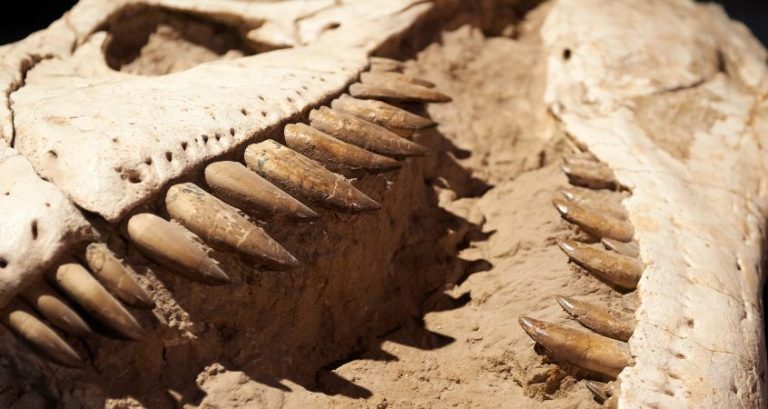
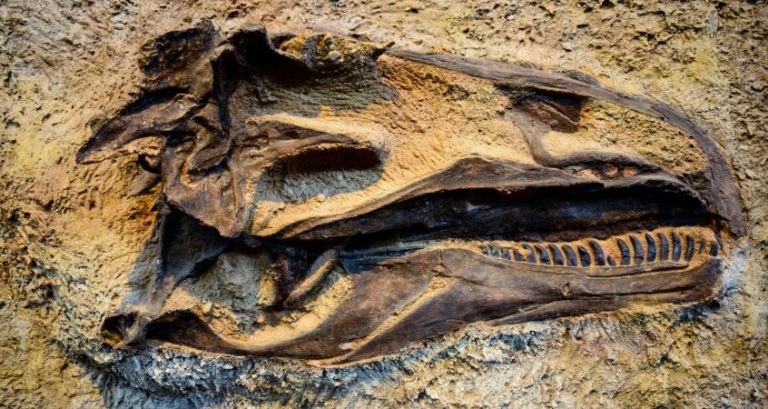
Paleontologists often rely on skull material when studying ceratopsians because body bones can look very similar across species. The Wyoming Dinosaur Center explains that postcranial bones, or bones from the body, can make ceratopsians difficult to tell apart. Skull features usually provide clearer evidence.
For Medusaceratops lokii, the frill became especially important. Later research reexamined material from the Mansfield bonebed and found that the dinosaur had a broad midsection of the frill and at least 5 epiparietals along the frill margin. Those frill details helped researchers revise its classification and recognize it as an early centrosaurine ceratopsian.
It Shows How Diverse Horned Dinosaurs Became
Medusaceratops lokii adds another unusual example to the ceratopsian family tree. Ceratopsians shared a basic body plan, but their skulls and frills developed many different shapes during the Late Cretaceous. The Wyoming Dinosaur Center notes that dozens of ceratopsian species lived across North America during that period, providing scientists with a wide range of headgear to compare.
The frill of Medusaceratops lokii stands out because of its curved, snake-like projections. Researchers connected those features to Medusa’s snake-covered head when they named the dinosaur. Later studies showed that the frill had at least five epiparietals along its edge, including a large hooklike feature and smaller triangular ones.
A Skeleton Named Mary Helps Bring It to Life
A mounted skeleton nicknamed “Mary” gives visitors a clearer way to picture Medusaceratops lokii. The Wyoming Dinosaur Center describes Mary as about 70% complete, which is a high percentage for a dinosaur skeleton of that age. The same exhibit notes that many dinosaur species come from only a few bone fragments, so a more complete skeleton can give researchers and visitors a stronger sense of the whole animal.
Mary also shows why fossil mounts need careful interpretation. The Wyoming Dinosaur Center explains that missing bones are sculpted and assembled alongside real bones, while skull elements in the mount may include sculptures or casts of real material. Even with those reconstructed parts, the mount helps show the animal’s body shape, four-legged stance, large head, and distinctive frill.
Collect Dinosaurs
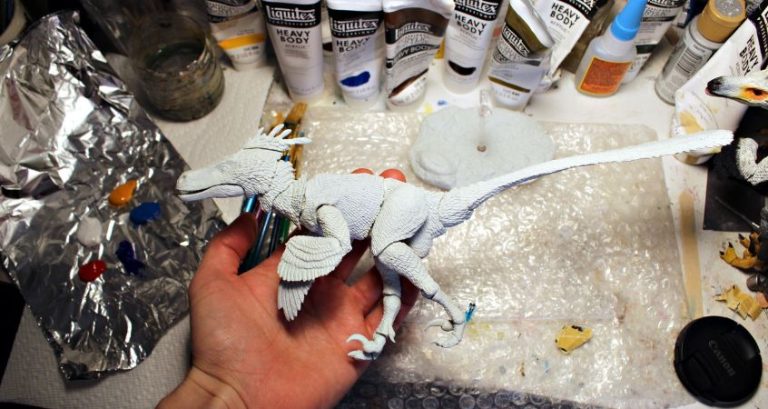
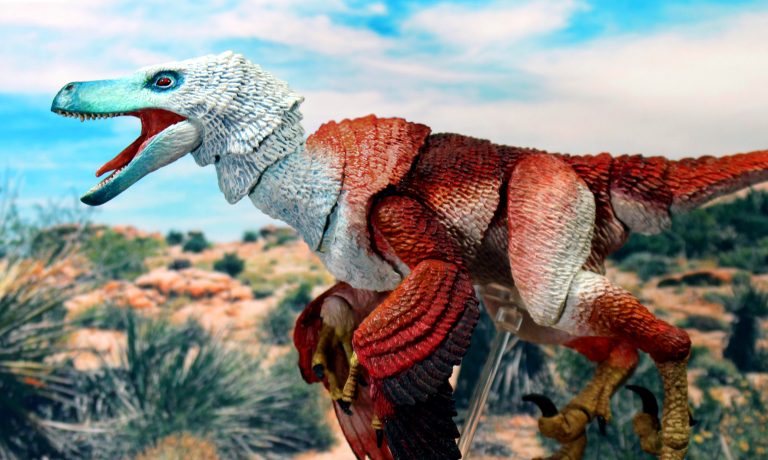
Medusaceratops lokii shows that even lesser-known horned dinosaurs can have fascinating fossil stories. Creative Beast Studio has dinosaur figures for sale that bring the same sense of discovery into its detailed prehistoric collectibles. Collectors who love accurate details, bold designs, and display-worthy prehistoric figures can find that same excitement in Creative Beast Studio’s prehistoric collectibles.
Dinosaurs like Medusaceratops lokii remind us that prehistoric life still has plenty of surprises left in the fossil record. Creative Beast Studio gives collectors a detailed way to turn prehistoric interest into something they can pose, display, and keep studying from every angle.